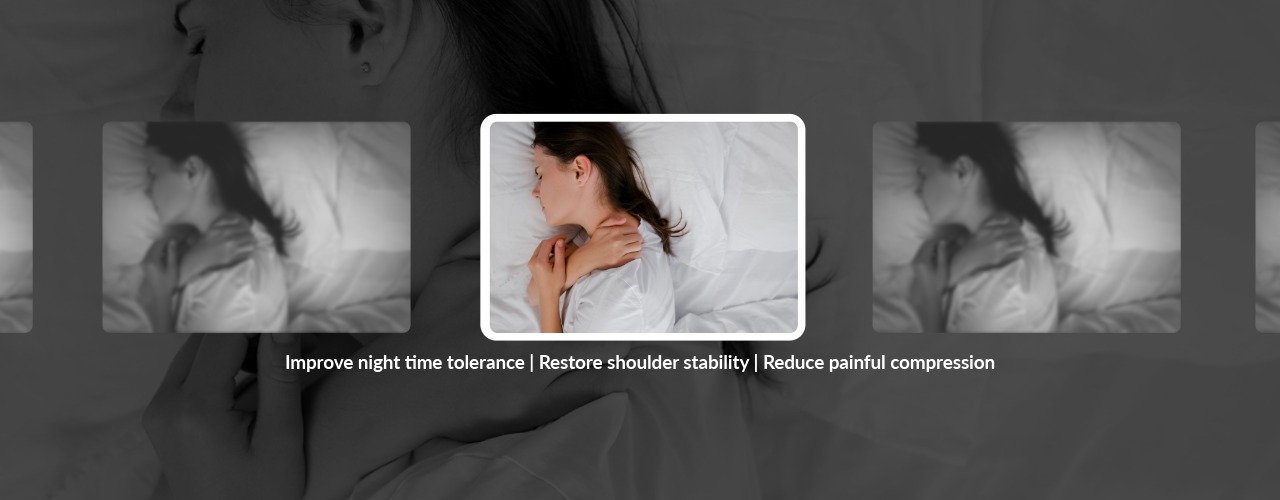
Most people assume that resting a painful shoulder means it should feel better by morning. So when shoulder pain at night is worse than it was all day, it is confusing and frustrating. It also does not make sense until you understand what is actually happening in the shoulder during sleep. Several very common beliefs about nighttime shoulder pain are simply wrong, and acting on them keeps people stuck in a cycle that a good care plan can interrupt.
The Myths That Keep People Up at Night
Shoulder pain that disrupts sleep tends to stick around longer than daytime pain because most people manage it the wrong way. They change pillows, avoid lying on that side, or wait it out. Sometimes those things help a little. They rarely fix anything. The reason is that the real contributors are almost never what people think they are.
Myth 1: Nighttime Shoulder Pain Means the Injury Is Getting Worse
Worsening pain at night does not mean your shoulder is deteriorating. When you lie down, the shoulder loses the support of the muscles that hold it in position during the day. The joint settles into a loaded position and stays there for hours. Tissue that is already sensitive becomes more reactive under that sustained compression. The pain feels worse because the mechanical situation has changed, not because the injury has progressed.
Myth 2: Sleeping on the Other Side Will Fix It
Switching sides helps some people some of the time. But if the shoulder itself has underlying mechanical contributors like rotator cuff weakness or restricted joint mobility, sleep position is a temporary workaround, not a solution. Many people find that eventually, both sides become uncomfortable as the shoulder becomes more sensitized overall. Fixing the position without fixing the shoulder is like turning down the volume on an alarm without addressing what set it off.
Myth 3: A Scan Will Explain Why Shoulder Pain at Night Is So Bad
Imaging findings and nighttime pain do not reliably correspond. Many adults have structural changes in the shoulder that show up on scans and sleep perfectly well. Others with minimal findings wake up multiple times a night. What a scan shows is a snapshot of structure. It does not explain how the shoulder is loaded during sleep, how the surrounding muscles are functioning, or how the nervous system is responding to sustained compression. A physical therapy examination tells a more useful story for understanding why nighttime symptoms behave the way they do.
Myth 4: Rest Is the Best Thing You Can Do for a Painful Shoulder
Complete rest weakens the rotator cuff and shoulder blade muscles that keep the joint properly positioned during both waking hours and sleep. When those muscles are underperforming, the shoulder sits in a slightly altered position under compression at night. That altered position is one of the most consistent contributors to shoulder pain at night. Appropriate guided movement builds the muscular support that actually improves how the shoulder tolerates lying down.
Myth 5: Shoulder Pain at Night Always Means a Rotator Cuff Tear
Nighttime pain is associated with several shoulder conditions, not just rotator cuff tears. Shoulder impingement, frozen shoulder, AC joint irritation, and biceps tendon involvement can all produce significant nocturnal symptoms. Assuming the cause without a thorough evaluation often leads to self-treatment that misses the real driver entirely. Each of these conditions has a distinct examination profile and a different treatment approach.
Myth 6: Physical Therapy for Nighttime Shoulder Pain Is Just Daytime Exercise
Effective care for shoulder pain at night addresses the specific mechanical contributors to why the shoulder loads poorly during sleep. That includes restoring joint mobility so the shoulder can settle into a comfortable resting position. It includes strengthening the rotator cuff muscles that control joint position under sustained load. It includes addressing posterior shoulder tightness that pulls the joint into a compressed position overnight. And it includes practical guidance on sleep positioning and pillow support that complements the physical work rather than substituting for it.
Sleep Is Not a Luxury. It Is Part of Recovery.
There is something particularly exhausting about pain that finds you when you are trying to rest. It affects concentration, mood, and how the body recovers from everything else during the day. Shoulder pain at night that consistently disrupts sleep deserves more than a pillow adjustment. Physical therapy will help get to the root of your problem and give you the tools to resolve it.
The team at National Physical Therapy has helped many adults figure out exactly why their shoulder behaves differently after dark and what it takes to change that. You should not have to choose a side of the bed based on which one hurts less.
Contact National Physical Therapy to schedule your evaluation and start sleeping like the shoulder is no longer running the show.