Physical Therapy Can Prepare You for Pickleball and Prevent Injuries at the Same Time!
Do you think about trying Pickleball with your friends but are worried about getting hurt? Has pain or an injury kept you on the sidelines but now you want to do what you can to get active again safely?
Our physical therapists are movement experts at National Physical Therapy. We are skilled at assessing your physical abilities, providing clear guidance on resolving problems, and preparing your body to tolerate an active lifestyle!
Pickleball is the fastest-growing sport in America, and the game is gaining more and more players daily. It is especially popular with older, retired folks looking to stay active and enjoy the social aspects associated with the game.
Too often, people jump right in, forgetting their bodies don’t move quite the same as they did just a few years ago. Our muscles undergo a progressive loss of muscle mass and strength as we get older. These muscle changes also impact our ability to react and change directions with the same speed and stability.
Unfortunately, these changes can lead to trips and falls while playing, resulting in injuries that prevent us from participating. At National Physical Therapy, our physical therapists have proven success working with people of all ages to recover from injury and resume whatever sport they enjoy. We will help you resolve any problem and prepare your body for the demands of pivoting, turning, and chasing down the ball.
Call today to request an appointment with one of our specialists!
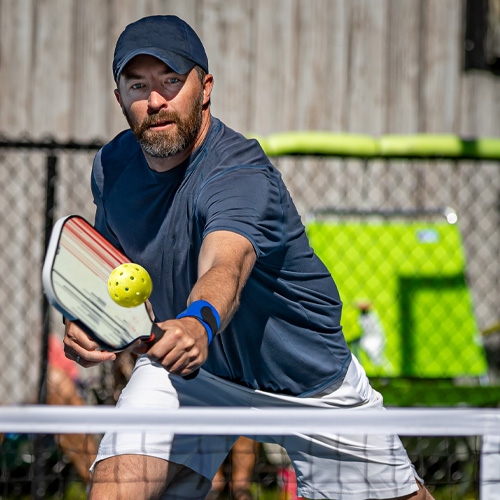
How Balance And Coordination Affect Your Risk Of Injury
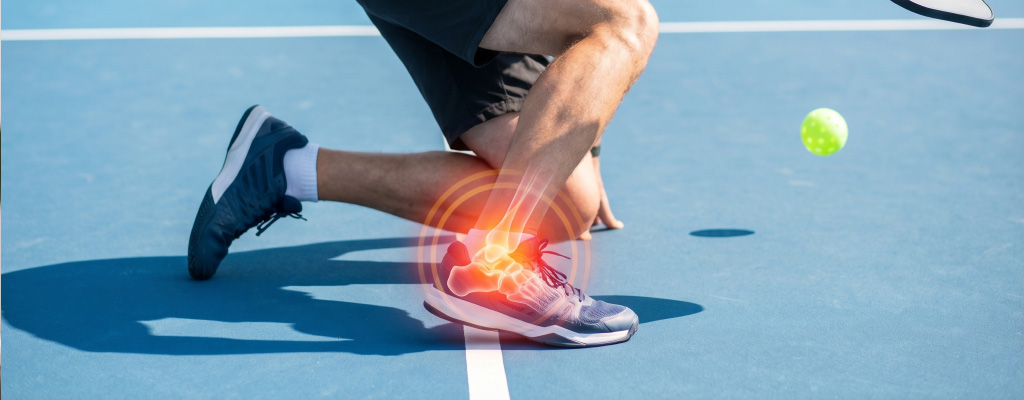
Falling while playing Pickleball is a fairly common event. Typically, someone loses balance and trips while trying to get to a ball just outside their reach. For some, it is trying to backpedal to reach an overhead ball, while others try changing directions to get that backhand shot.
Two of the most common injuries associated with Pickleball are a fractured wrist and a torn rotator cuff muscle. Both injuries occur from falling on an outstretched arm/hand. As we get older, our bodies cannot react the same as when we are younger, and we cannot tolerate the impact either.
Fortunately, it is possible to improve our body’s ability to react and tolerate the demands of Pickleball. Our team will identify the factors that may contribute to coordination and balance impairments and give you the tools to improve your abilities.
Coordination is defined as the ability to execute smooth, accurate, controlled responses through optimal interaction of muscles. One of the most critical aspects of coordination is selecting the right muscle at the right time with the proper intensity to achieve the appropriate action.
Our National Physical Therapy team can work with you to train your muscles to contract with appropriate speed, distance, direction, and timing. When we get multiple muscles working coordinated, we can perform the desired activity.
As we age, we all suffer from a loss of muscle mass. This significantly affects function in all activities, contributing to a reduction in balance, reduced gait speed, and increased risk of falls. Fortunately, you can improve your dynamic stability through proper balance training drills.
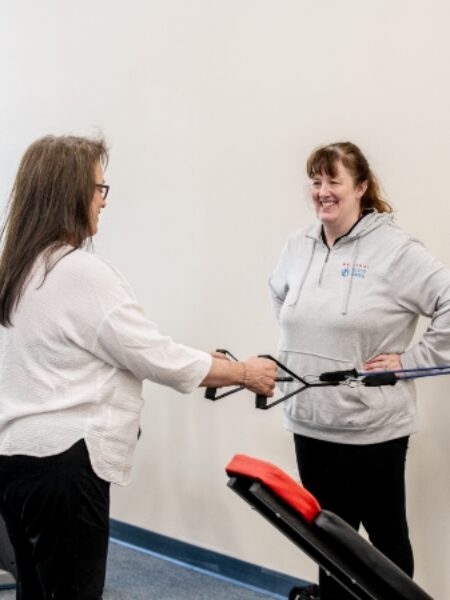
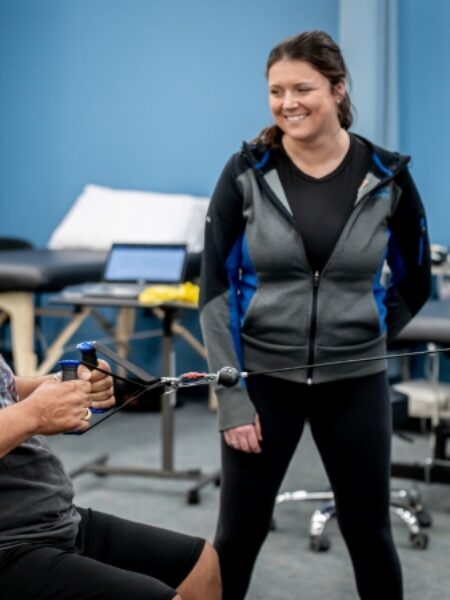
At National Physical Therapy, our therapists will design exercises that strengthen your muscles and improve your coordination and neuromuscular control so you can safely participate in Pickleball and any other activity!
What To Expect During Your Physical Therapy Visits
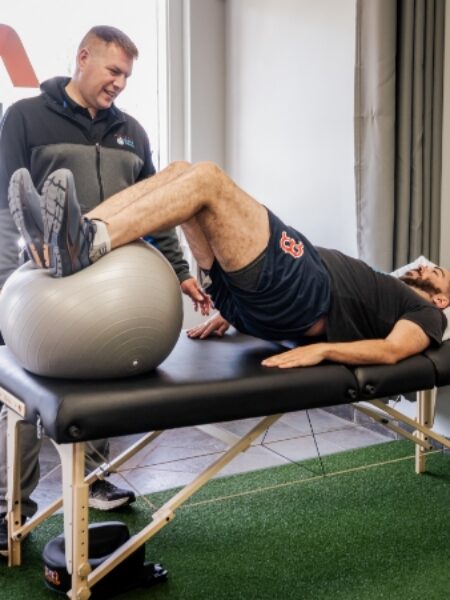
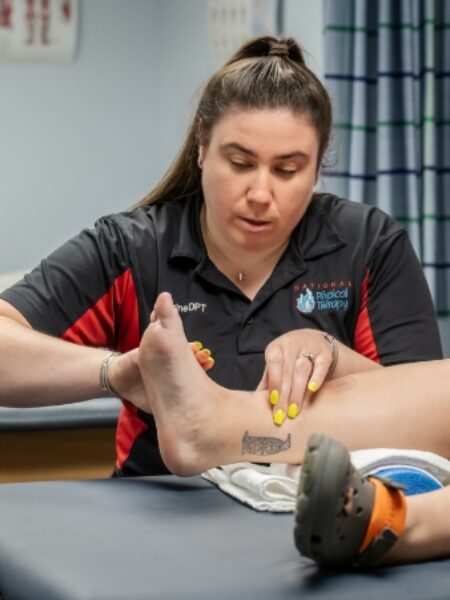
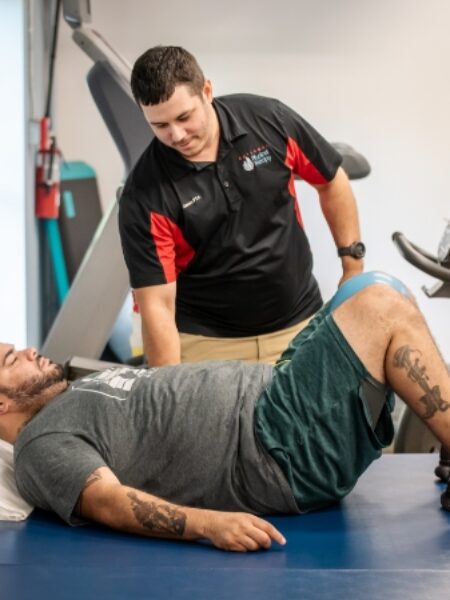
Our physical therapists help in a variety of ways. We will start with an injury evaluation and a movement assessment to identify all the factors contributing to any limitation affecting your function.
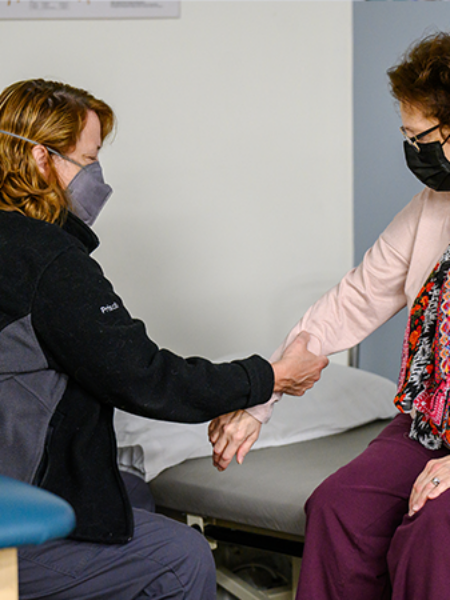
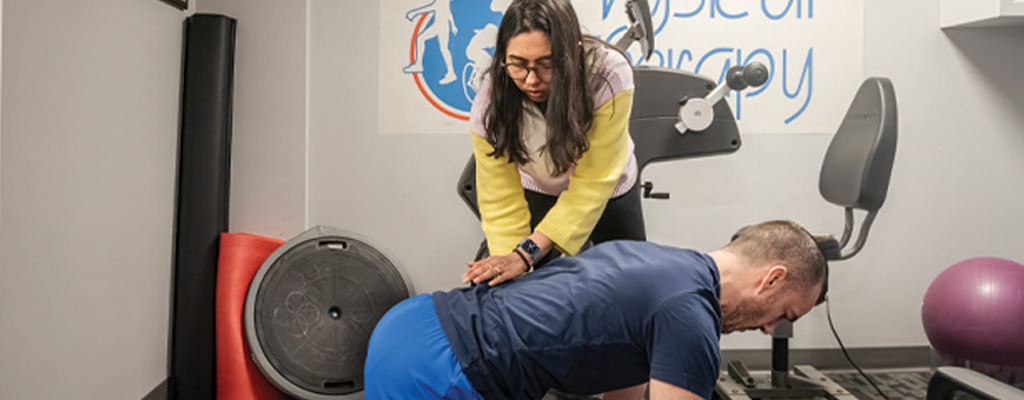
Our assessments will also include a thorough history to understand past injuries and your overall health status. We will use this information to develop a comprehensive program that provides targeted manual techniques, mobility work, strengthening, and any appropriate pain relief technique for the individual.
Next, we will conduct a detailed balance assessment. Our assessment will test the following systems:
- Somatosensory system (i.e., neural structures that detect touch, temperature, body position, and pain)
- The vestibular system (sensory system responsible for providing information about motion, head position, and spatial orientation)
- Musculoskeletal systems (i.e., strength, range of motion, joint health, etc.)
Your physical therapist will use this information to incorporate balance and coordination treatments to return to sport/activity safely. Our goal is to ensure you can safely participate in the activities you love!
Request An Appointment At National Physical Therapy Today!
At National Physical Therapy, our therapists have proven successful in helping athletes recover and prepare for the sports they love.
Call today to schedule an appointment with one of our specialists so we can make sure you are playing pickleball at your peak abilities!
Healthy Recipe
Spring Asparagus Risotto
Ingredients
- 4 cups (1-inch) sliced asparagus (about 1 1/2 pounds), divided
- 3 cups fat-free, low-sodium chicken broth
- 1 1/2 cups water
- 1 tbsp butter
- 2 cups chopped onion (about 1 large)
- 2 cups uncooked Arborio or other medium-grain rice
- 1/2 cup dry white wine
- 1 cup (4 ounces) grated fresh Parmigiano-Reggiano cheese, divided
- 1/4 cup heavy whipping cream
- 1 tsp salt
- 1/2 tsp freshly ground black pepper
Directions
Place 1 cup asparagus and 1 cup broth in a blender; puree until smooth. Combine puree, remaining 2 cups broth, and 1 1/2 cups water in a medium saucepan; bring to a simmer (do not boil). Keep warm over low heat. Melt butter in a large heavy saucepan over medium heat. Add onion to pan; cook 8 minutes or until tender, stirring occasionally. Stir in rice; cook 1 minute, stirring constantly. Stir in wine; cook 2 minutes or until liquid is nearly absorbed, stirring constantly. Add 1/2 cup broth mixture; cook 2 minutes or until the liquid is nearly absorbed, stirring constantly. Add remaining puree mixture, 1/2 cup at a time, stirring constantly until each portion of broth is absorbed before adding the next (about 30 minutes total). Stir in remaining 3 cups asparagus; cook 2 minutes. Stir in 3/4 cup cheese, cream, salt, and pepper. Transfer risotto to a bowl. Serve with remaining 1/4 cup cheese.

5 Benefits of Spring Cleaning
Have you been putting off spring cleaning? If so, you certainly aren’t alone. With your hectic schedule, it can be easy to overlook this essential activity.
However, there are many reasons why you should include spring cleaning into your routine. Here are 5 good reasons to make time for spring cleaning this season.
1. A clean home is better for your immune system
Mold, dust, and pet dander can accumulate in your home during the colder months when there is less opportunity for air circulation. A deep dive into spring cleaning helps to air out your home, preventing respiratory issues.
2. It’s an easy way to get active
Cleaning can be a real workout! From sweeping the floors to scrubbing tile to moving around furniture, spring cleaning can help you get active. Exercise has numerous benefits, including stress reduction and better heart health.
3. It lessens the possibility of injury
A cluttered home puts you, your children, or an elderly family member at risk of injury. Clearing out high-traffic areas and walkways can help to prevent falls, which can be especially dangerous for older individuals.
4. It improves concentration and mood
Studies show that a clean home positively affects your daily mood and ability to focus/complete tasks. Now that so many of us work from home, this has never been more important!
5. You can donate unused items to others
Part of cleaning is going through old and unused items to see what can find a new home. Not only is donating to charity emotionally rewarding, it helps free up space in your home and can encourage you to become more organized.
With so many benefits to spring cleaning, what are you waiting for? Get started today!

Local Deal for You!
Special savings from our trusted community partners.
Our Patients Get Great Results
“I have had physical therapy at this facility and I would recommend anyone to go here. My treatment has been for Craniosacral therapy with Priscilla Douglas and she is amazing. I suffer from multiple conditions which include Systemic Lupus, Psoriatic Arthritis, Fibromyalgia, and degenerative muscles, bones and joints. I have made progress with range of motion, less headaches and better sleep because of the therapy treatments at this facility. The staff from the front desk to the therapists are friendly and accommodating to every person’s unique needs.”
– Dawn S.
Thank you for subscribing to National Physical Therapy
Refer a Friend

Our purpose at National Physical Therapy is to leave a greater impact on the community around us. In order to achieve our goal we want to change as many lives as possible as we become a beacon of positivity in our community.