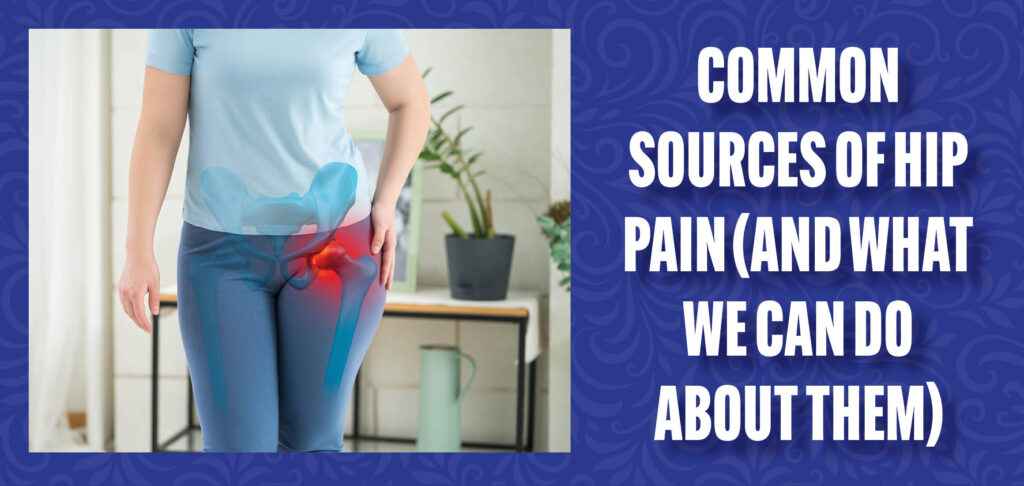
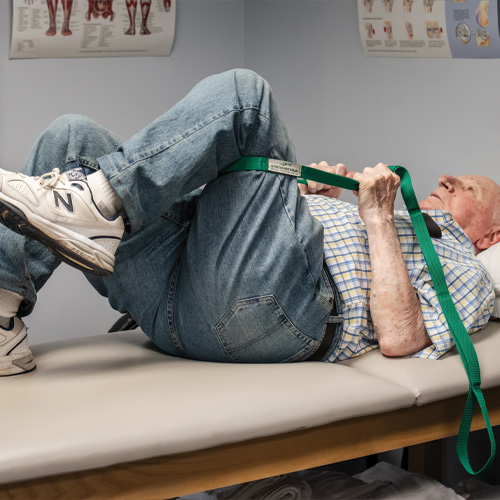
Have you noticed a persistent discomfort in your hip? Is impaired hip mobility making it difficult for you to handle day-to-day tasks? Hip pain isn’t something you have to live with. But to resolve your pain, you’ll need to identify why you’re experiencing pain in the first place.
At National Physical Therapy, our team of musculoskeletal experts can help you determine the root cause of your hip pain. Whether it’s an underlying injury or a chronic condition like arthritis, we’ll get you the answers you need — and the relief you deserve!
Today, we want to explore some common causes of hip pain and give you some insight into how physical therapy can help. But if you’re currently dealing with hip pain, your best bet is to call us to schedule an initial consultation. Our team can give you personalized guidance to return to an active, healthy lifestyle!
Why Do My Hips Hurt? Common Hip Injuries and Conditions
Osteoarthritis (OA): If you’re an older adult, your hip pain might stem from osteoarthritis, which occurs when the cartilage in a joint starts to degenerate. The hips are one of the more common locations for OA. Symptoms include…
• Pain in the hip and/or groin
• Stiffness in the hip joint, especially after you haven’t moved it for a while
• A sense of weakness in your legs
Hip Impingement: Your hip is a ball-and-socket joint. When the ball part of the joint pinches up against the socket part, you can develop hip impingement. It’s most common in young, active people. Watch out for…
• Pain in the hip joint and discomfort elsewhere in the general area (groin, thighs, lower back)
• Sharp stabbing pain when using your hip (i.e., squatting, running, etc)
• Symptoms that gradually develop over time
Hip Labral Tear: Your labrum is a ring of cartilage that protects your hip socket. A labral tear occurs when that cartilage tears, often due to overuse or a hip impingement. Symptoms include…
• A persistent, dull ache that feels like it comes from deep inside your hip
• Sharp, stabbing pains when using your hip
• Clicking or popping sounds when using your hip
• A feeling of instability in the hip
Hip Strain: A hip strain occurs when the muscles or tendons that support your hip joint become damaged. Your exact symptoms will vary somewhat based on the severity of the strain, but in general, you can expect…
• Pain, especially when using the affected muscle
• Swelling
• Limited range of motion
• Muscle weakness
Hip sprains can also occur, but they tend to be rare. A sprain affects the ligaments in your hip (the tissue that connects the joint). Symptoms are similar to a strain, but you might also experience a sense of the joint buckling under your weight.
What We Can Do to Address Your Hip Pain
Of course, identifying the cause of your hip pain is only the first step in addressing it. Once we know why you’re experiencing pain, we can develop a personalized treatment plan for your needs.
If you’ve suffered a hip injury, we’ll guide you through rehabilitation. Sometimes, physical therapy alone is enough to resolve the injury; other times, you may need medical intervention. Either way, here’s what you can expect:
- Drug-free pain management techniques (such as manual therapy)
- Early mobility work to help improve your range of motion
- Exercises to restore strength and stability
- Targeted balance and gait training
- Activity-specific training (especially if you’re an athlete)
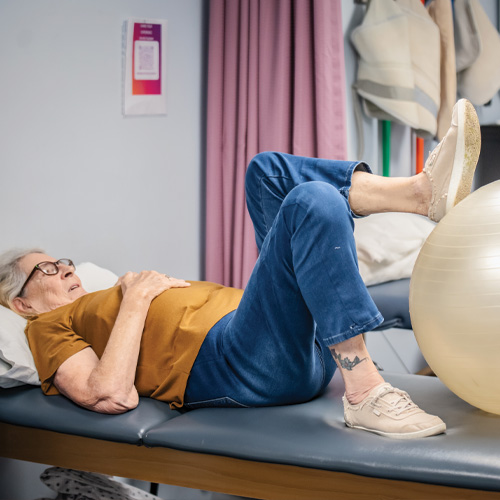
If you’ve developed osteoarthritis, we can help you manage your symptoms and delay the progression of your condition. OA doesn’t have a cure, but physical therapy is considered a frontline treatment to help you avoid a total hip replacement. Your treatment plan may include…
- Manual therapy to help reduce pain and improve mobility
- A personalized exercise program to help you stay active (regular exercise is one of the best ways to manage osteoarthritis)
- Balance and gait training to help reduce your fall risk
- Activity modifications and other strategies to help you manage discomfort throughout the day
No matter the reason for your hip pain, the National Physical Therapy therapists will find a solution that works for you. Call us today to schedule an appointment to get started on your journey to hip pain relief!
Your Success Is Our Priority!
Return to National Therapy, and Let’s Continue Your Journey to Wellness Together. Schedule Your Appointment Now!
Exercise of the Month
FIGURE 4 BRIDGE
Begin on your back. Bend your knees and keep your back flat on the ground. Cross one leg over the other so that your legs make a “4”. Gently, contract your abdominals and hold to keep your back flat as you move up into the bridge position. Remember to breathe. Gently, squeeze your butt muscles and lift your hips off the ground. The goal is to have your hips aligned with your knees and shoulders.
3 Sets, 10 Reps.


Kids Heading Back to School? Prevent Backpack Back Pain
Between laptops, tablets, and textbooks, heavy backpacks are a reality for students heading back to school this fall. When backpacks are worn incorrectly or overloaded, they can contribute to back pain—especially discomfort in the upper back and shoulders.
The good news? A few simple adjustments can help your child stay comfortable, improve posture, and start the school year feeling their best.
A Healthier Backpack Starts With Smart Habits
Proper backpack fit, lighter loads, and good posture habits can reduce unnecessary strain on your child's growing spine and help prevent aches throughout the school year.
Find the Right Fit
Choose a backpack that fits your child properly. It should sit comfortably against their back and rest near the hips rather than hanging heavily from the shoulders.
Keep It Lightweight
A backpack should not exceed 10% of your child's body weight. Use a scale to check that books, devices, and supplies are not creating unnecessary strain.
Encourage Good Posture
Teach your child to stand tall by lifting their chest upward and keeping their spine aligned for healthier posture throughout the day.
Hanover Has Moved!
We’re excited to announce that our Hanover location has moved! The new clinic offers more treatment space and the same friendly team you know and trust.
New Address:
1207 Washington St Suite B5,
Hanover, MA 02339
Phone: (781) 412-1549


Real Recovery.
Real Results.

Ingredients
- 2 large beets
- 4 long carrots
- 2 apples
- 6 celery stalks
- 2 limes or lemons
- 2 inches of ginger
Instructions
- Wash and prepare the beets, carrots, apples, celery, limes or lemons, and ginger by chopping them into smaller pieces that will fit into your juicer.
- For the beets, you can leave the skin on for added nutrients and antioxidants. If the flavor is too strong, peel some or all of the beets.
- If using lemon, the peel can have a strong flavor. Peel the lemon if preferred, or leave some of the peel on for a more intense citrus flavor.
- Apples can be any color or variety. Remove any seeds or stems as needed for your juicer.
- Do not peel the ginger. Add it to taste, as ginger can have a strong, spicy flavor.
- Place all of the prepared ingredients into your juicer and process until the juice is smooth.
- Pour into glasses and enjoy the juice as soon as possible for the freshest flavor and nutritional value.
🌱 Ingredients That Support Your Wellness
Refer a Friend

Our purpose at National Physical Therapy is to leave a greater impact on the community around us. In order to achieve our goal we want to change as many lives as possible as we become a beacon of positivity in our community.