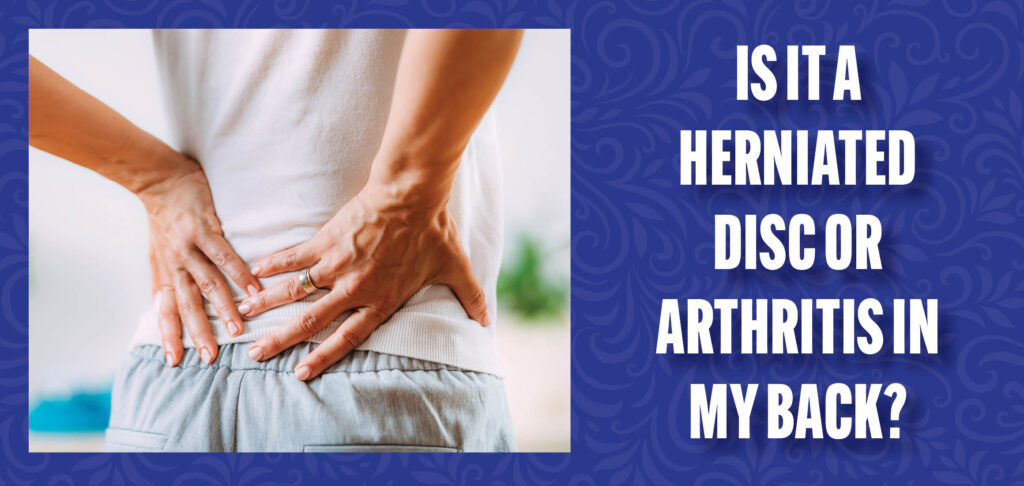
Back pain can definitely make daily life a struggle. You might have a hard time getting out of bed, walking your dog, or sitting through a meeting at work. But if you want to find last relief, your first step is to figure out what’s causing your pain in the first place.
Back pain can have a number of different causes. Sometimes, it’s obvious, like when you strain a back muscle while you’re working in the yard. But other times, back pain can seem to come out of nowhere–or worse, linger for months.
At National Physical Therapy, one of the first things we do is work with you to determine the nature of your back pain. Today, we want to look at two potential causes of back discomfort that aren’t necessarily tied to injuries: herniated discs and spinal arthritis.
While both conditions can cause back pain, they affect the spine differently and often produce distinct symptoms. Understanding the difference can help you take the next step toward relief.
Herniated Discs Versus Arthritis: What You Need to Know
Both herniated discs and arthritis involve your spine: specifically, the small, interconnected bones in your spine called the vertebrae, as well as the surrounding structures. The difference lies in which part of the spinal structure is affected:
A herniated disc
Spinal arthritis
So, how do you know which is which? Your best bet is to schedule an appointment with the team at National Physical Therapy. We can perform a comprehensive evaluation and let you know for sure. However, certain signs and symptoms can give you insight before you come into the clinic.
Symptoms Associated with a Herniated Disc
- Pain shoots into either your buttock, thigh, or leg, or your shoulder, arm, or hand
- Numbness or tingling in the affected limb
- Sitting makes symptoms worse
- Coughing or sneezing increases pain
- Symptoms appeared after lifting, twisting, or an injury
- One leg or arm feels weaker than the other
Symptoms Associated with Arthritis
- Your back feels stiff in the morning
- Symptoms developed gradually over months or years
- Pain stays mostly in the back
- Standing up after sitting is difficult
- Gentle movement improves symptoms
- You notice reduced mobility when bending or twisting
Finding Relief with Physical Therapy
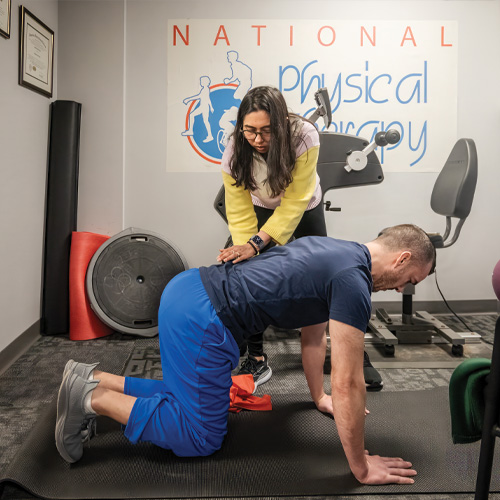
Whether your back pain is caused by a herniated disc, arthritis, or a combination of factors, conservative, movement-based care is particularly effective. At National Physical Therapy, our goal is to reduce your pain and improve your function so you can return to the activities you enjoy.
If you have a herniated disc, treatment often focuses on reducing nerve irritation, restoring mobility, and improving spinal support. When addressing arthritis, we emphasize improving joint mobility, reducing stiffness, and maintaining strength to support long-term function.
In either case, the first step is a thorough evaluation to identify the source of your symptoms and understand how they’re affecting your daily life. From there, we create a personalized treatment plan based on your condition, goals, and activity level. Your treatment may include:
- Education on posture, lifting mechanics, and daily activities
- Manual therapy to ease restrictions in the spinal joints and surrounding soft tissue
- Stretching techniques to reduce stiffness and improve movement
- Targeted exercises to improve strength and function
- Core stabilization training to better support the spine
- Balance and stability training to improve overall movement
Don’t Let Back Pain Get You from an Active Lifestyle
Early treatment makes a meaningful difference for both herniated discs and arthritis. If back pain is limiting your ability to enjoy life, the team at National Physical Therapy is here to help. Contact us today to schedule an evaluation and learn how a personalized treatment plan can help you move better, feel better, and get back to doing what you love.
Exercise of the Month
LOWER TRUNK ROTATIONS
Start by lying face up on the floor with your knees bent. Allow your knees to slowly drop to one side. Your lower back should rotate, but your shoulders should stay flat on the ground. Hold for 30 seconds. Bring your knees back up and then drop them to the opposite side.
2 Sets, 2 Reps.


Stay Active Without Overheating
Put the cool factor back into your workout routine this summer. Staying hydrated, listening to your body, and making a few smart adjustments can help you exercise safely while continuing to build strength, endurance, and overall fitness.
Cool Down Before You Start
Hop into a cold shower before exercising. Research suggests a pre-workout cooldown can lower your heart rate and body temperature, helping you perform better in hot weather.
Choose Cooler Routes
Walk, run, or cycle on dirt and gravel paths whenever possible. These surfaces absorb less heat than asphalt and concrete, making outdoor workouts feel much more comfortable.
Use Cooling Essential Oils
A few drops of peppermint or eucalyptus oil on your neck and temples can create a refreshing cooling sensation while helping open nasal passages during humid conditions.
Train Smarter With Intervals
Maintain conditioning by exercising at a slightly easier pace while adding short 30-second bursts of speed every few minutes for an efficient workout.
Refuel With Fruit
Watermelon, grapes, cantaloupe, and honeydew contain over 80% water, making them excellent post-workout snacks for hydration and recovery.
Hydrate Consistently
One of the most important summer fitness habits is staying hydrated before, during, and after exercise to help prevent fatigue, overheating, and muscle cramps.
Make Summer Your Strongest Season Yet
With the right preparation and a few heat-smart strategies, you can continue exercising safely throughout the summer while enjoying all the benefits of an active lifestyle.
Hanover Has Moved!
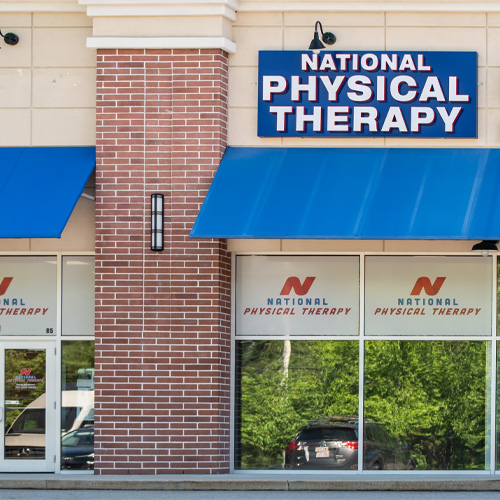
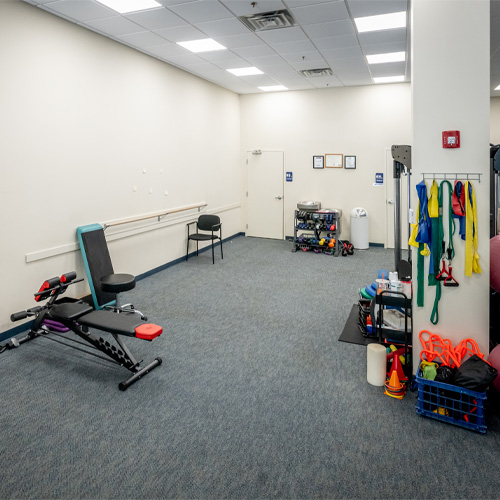
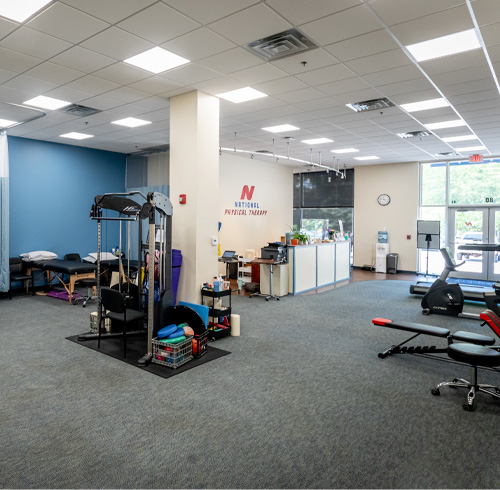
We’re excited to announce that our Hanover location has moved! The new clinic offers more treatment space and the same friendly team you know and trust.
New Address:
1207 Washington St Suite B5,
Hanover, MA 02339
Phone: (781) 412-1549
Real Recovery.
Real Results.

Ingredients
- 1 (32-ounce) can whole tomatoes, drained
- 1 cup fresh basil leaves
- 4 tablespoons extra-virgin olive oil
- 6 cloves garlic, peeled
- Kosher salt
- Freshly ground black pepper
- 2 large French baguettes, sliced into 1-inch slices (about 36 slices)
- 1½ pounds fresh mozzarella cheese, sliced ¼-inch thick
Directions
- Preheat oven to 375°F.
- In a food processor, combine the drained tomatoes, basil, olive oil, and 2 garlic cloves. Pulse until smooth but still slightly chunky.
- Season the tomato mixture with kosher salt and freshly ground black pepper.
- Arrange the baguette slices on a baking sheet and toast for about 3 minutes.
- Rub the toasted side of each slice with the remaining garlic cloves.
- Top each slice with a piece of fresh mozzarella and return to the oven for about 45 seconds, just until the cheese softens.
- Spoon about 1 tablespoon of the tomato mixture onto each slice.
- Transfer to a serving platter, garnish with fresh basil leaves, and serve immediately.
Refer a Friend

Our purpose at National Physical Therapy is to leave a greater impact on the community around us. In order to achieve our goal we want to change as many lives as possible as we become a beacon of positivity in our community.